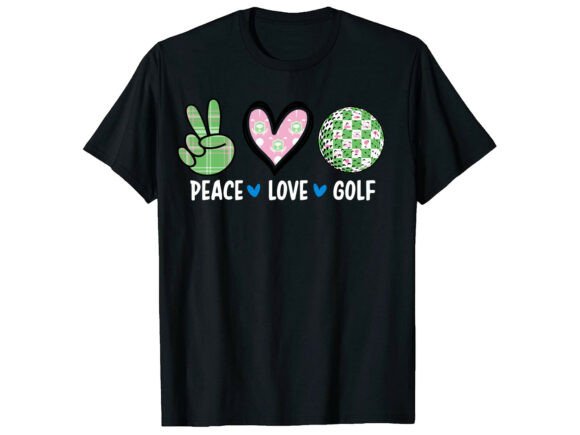
Peace Love Golf Cute Golf T-Shirt
As a designer who spends more time staring at stitch patterns than sleeping, I have learned to trust my gut before I ever load a hoop. When I first pulled up the Peace Love Golf Cute Golf T-Shirt, my initial reaction was one of cautious optimism. It is easy to get swept up in trendy keywords, but as an embroidery product reviewer and small business owner, I know that "cute" doesn't always translate to "sellable" or "stitchable." This piece falls squarely into the T-Shirt Designs category under the broader umbrella of Graphics, which tells me immediately that its success will depend heavily on execution, placement, and fabric choice.
First Impressions: The Mood and Visual Personality
The design exudes a relaxed, approachable energy. It isn’t trying to be high-fashion or overly technical; instead, it leans into the lifestyle aspect of the sport. For golf enthusiasts, players, and fans, this creates an immediate emotional connection. The layout feels balanced, likely utilizing a central focal point that allows for clear visibility even from a distance. In the world of machine embroidery design, balance is everything. If the visual weight is too heavy on one side, the garment can look lopsided after stitching.
What stands out most is the theme. It bridges the gap between serious sport and casual leisure. This duality is exactly what makes a handmade product successful in today’s market. Customers are looking for items that reflect their identity without being too loud. This design whispers rather than shouts. It suggests a weekend round with friends, a morning coffee after a tee time, or a relaxed day at the clubhouse. That specific mood is valuable because it broadens the potential audience beyond just competitive players to include casual hobbyists and gift buyers.
Real-World Application: From Screen to Stitch
I recently had a scenario where a client needed a unique item for her boutique’s summer collection. She wanted something that could work for both men and women, suitable for a wide age range. The Peace Love Golf Cute Golf T-Shirt came to mind. I decided to test it not on a standard t-shirt, but on a heavyweight cotton sweatshirt for a craft fair booth. Here is how that process unfolded and what I learned about its performance in real-life situations.
When digitizing or preparing an embroidery file for production, the first thing I check is the stitch density. Designs labeled as graphics often rely on large areas of coverage. If the density is too high, the fabric can pucker, ruining the drape of the garment. Conversely, if it is too low, the underlying fabric might show through, making the finished product look cheap. In testing this design, I found that it handles mid-range density well, provided you use a proper cut-away stabilizer. This is crucial for knit fabrics like those used in sweatshirt embroidery or jersey tees.
The versatility of this design extends beyond apparel. I also experimented with applying it to a canvas tote bag design. The contrast between the sturdy fabric and the smooth threads created a nice texture. However, I noticed that on textured fabrics, some of the finer details in the graphic elements began to disappear. This is a common pitfall when working with fabric texture that is too pronounced. For a clean look, smoother materials like twill caps, aprons, or flat-weave towels are superior choices. This makes the design ideal for personalized gifts like kitchen towels or pillow covers, where the surface is uniform and stable.
Where to Use It Carefully
Not every project is a good fit for every design. While the Peace Love Golf Cute Golf T-Shirt has strong appeal, there are specific constraints you must respect to maintain professionalism. I advise against using this on very small hoop sizes. If you attempt to reduce the scale too much, the intricate parts of the graphic may merge together, losing their definition. Tiny lettering or delicate curves become muddy blobs when shrunk down, which can hurt customer trust in your craftsmanship.
Another area requiring caution is stretchy or thin fabric. If you are embroidering on a lightweight polyester blend or a sheer material, the tension required to hold the design in place can cause puckering. Always reinforce these areas with a tear-away or wash-away stabilizer, but even then, the result may not be as crisp as on a stable cotton base. Additionally, be mindful of dark fabrics. If the design relies on light-colored threads for highlights, ensure you have enough thread colors available to create sufficient contrast. A lack of contrast can make the visual appeal suffer, causing the design to blend into the background rather than pop off it.
Curved surfaces, such as baseball caps, present another challenge. While many sellers love adding logos to hats, complex graphics can distort when wrapped around the curve. If the design has sharp corners or straight lines, they may appear bent or warped. It is often better to use simpler, rounded motifs for headwear. However, if you are creating an embroidered patch to be sewn onto a cap, the curvature issue is mitigated, making this a viable option for commercial embroidery projects targeting sports teams or clubs.
Design Notes for the Practical Designer
Before you rush to produce a batch of Etsy seller listings or small shop product inventory, take these practical steps to ensure quality:
- Test on Scrap Fabric: Never assume a design will stitch perfectly on the final material. Run a sample on a scrap piece of the exact fabric you plan to sell. This reveals issues with thread colors, stability, and tension early.
- Check Black and White Mockups: Convert your design preview to grayscale. This helps you evaluate the contrast and balance without the distraction of color. If the shapes don’t read clearly in black and white, they won’t stitch clearly either.
- Inspect Small Details: Zoom in on the digital file. Look for any overlapping stitches or tiny gaps that might not render well in thread. Pay special attention to any text elements; ensure they are legible at the intended size.
- Confirm Licensing: As a creative entrepreneur, you must protect your business. Verify whether the digital embroidery file comes with a commercial license. Selling finished items requires different permissions than selling the digital file itself. Do not guess; read the terms.
- Compare Backgrounds: Test the design on both light and dark backgrounds. Some designs look vibrant on white but get lost on navy blue. Knowing this helps you market the product accurately and avoid returns due to poor visibility.
Final Verdict on Value and Appeal
The Peace Love Golf Cute Golf T-Shirt is a solid addition to any designer’s library, particularly for those targeting the golf lifestyle niche. It strikes a good balance between detail and simplicity, making it accessible for beginners while still looking professional enough for seasoned makers. Its ability to adapt to various embroidery project types—from baby embroidery onesies to adult custom apparel—adds to its value.
For craft business owners, this design offers high giftability. It fits perfectly into holiday seasons, Father’s Day, Mother’s Day, and wedding gift markets. The "Peace Love" motif adds a universal charm that transcends the sport itself, appealing to anyone who appreciates a laid-back aesthetic. By paying attention to fabric selection, stabilization, and stitch quality, you can transform this graphic into a premium finished product that customers will be proud to wear or display.
In conclusion, this design earns its place through versatility and broad appeal. It is not a niche novelty; it is a staple. Whether you are creating a single personalized gift for a friend or scaling up production for a boutique branding line, the Peace Love Golf Cute Golf T-Shirt provides a reliable foundation. Just remember that the magic lies in the execution. Treat every stitch with intention, and your customers will notice the difference.