Pixel Vegetables Seamless Pattern Review
As a designer who spends half my life staring at stitch charts and the other half trying to convince clients that embroidery has more depth than a flat print, I approach every new digital asset with a healthy dose of skepticism. We have all seen patterns that look vibrant on a screen but turn into muddy, indistinguishable blobs once they hit the hoop. This is where Pixel Vegetables Seamless Pattern catches my attention. It promises a specific aesthetic—retro, nostalgic, cartoonish—and delivers it in a format that suggests versatility. But does it hold up when we talk about real-world application, from custom Etsy listings to high-volume commercial merch?
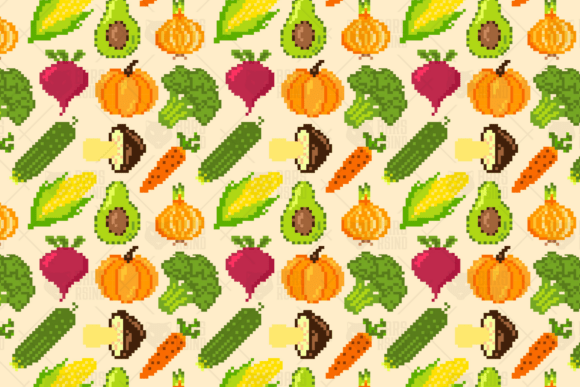
I recently put this design through its paces, not just by looking at the preview, but by mentally mapping it out against several common product categories. The core concept is a seamless pixel art pattern featuring a colorful assortment of vegetables. On paper, "veggies" can feel a bit generic, almost cliché in the crafting world. However, the execution here relies heavily on the retro gaming aesthetic, which adds a layer of visual personality that elevates it above standard botanical illustrations. It feels playful without being childish, which is a delicate balance to strike.
The First Impression: Mood and Visual Weight
When you first load an embroidery file or view a graphic asset, your eye is immediately drawn to contrast and spacing. Pixel Vegetables Seamless Pattern excels in clarity. Because it is built on a grid system typical of pixel art, the shapes are defined by hard edges rather than soft gradients. For an embroiderer, this is a massive advantage. Soft gradients often require complex satin stitches or dense fill stitches that can pucker fabric or lose detail if the thread tension isn’t perfect. Pixel art, by nature, simplifies the image into distinct blocks of color.
The mood created is undeniably warm and inviting. It taps into that sense of nostalgia many consumers feel toward 8-bit and 16-bit eras, but grounds it in something organic and wholesome—the vegetable theme. This makes it surprisingly versatile. It doesn’t scream "loud streetwear," nor does it whisper "quiet minimalist." Instead, it sits comfortably in the middle, making it ideal for lifestyle brands, home goods, and personalized gifts. The layout feels balanced, avoiding the chaotic clustering that often plagues lesser seamless patterns. You can imagine this repeating seamlessly across a large surface area without creating distracting focal points that pull the eye away from the rest of the garment or item.
Real-World Application: Where Does It Shine?
To truly judge an embroidery design, you have to imagine it on a finished product. Let’s look at a few scenarios where Pixel Vegetables Seamless Pattern would likely perform exceptionally well.
- Custom Apparel and Sweatshirts: Imagine a crewneck sweatshirt in a heather grey or muted olive green. Applying this pattern as an all-over print effect via embroidery (or using it as a large chest graphic) creates a textured, tactile experience that a standard DTG print cannot match. The pixelated veggies pop against neutral backgrounds, offering a subtle yet distinctive branding element for small business owners.
- Kitchen and Home Textiles: This is perhaps the strongest use case. A set of kitchen towels, tea towels, or even a quilted apron featuring this pattern feels cohesive and thematic. The vegetable motif aligns perfectly with cooking and hospitality. When stitched onto cotton or linen, the pixel art gains a charming, handmade quality that enhances the perceived value of the item. It turns a simple towel into a conversation piece.
- Baby Items and Nursery Decor: The cartoonish, rounded nature of pixel art makes it inherently friendly and safe-looking. For baby onesies, burp cloths, or nursery wall hangings, this pattern offers a modern twist on traditional nursery themes. It avoids the cutesy overload of some children's designs while remaining engaging for young eyes. Parents appreciate designs that are cute but not overly saccharine.
- Tote Bags and Accessories: For the Etsy seller or craft fair vendor, durability and appeal are key. A canvas tote bag embroidered with this pattern serves as both a functional item and a walking advertisement. The seamless nature allows for creative placement—you aren't limited to a single central box. You can frame it around pockets or hemlines, adding a professional touch to what might otherwise be a plain accessory.
In these contexts, the design acts as a strong foundation. It supports the idea of a "handmade product" because the texture of the thread adds dimension that digital graphics lack. Customers buying from a small shop or boutique often pay a premium for that tangible quality, and this pattern provides enough visual interest to justify that price point.
Where Caution Is Required
No design is perfect for every situation, and Pixel Vegetables Seamless Pattern has its limitations based on its structural nature. As a designer, I always advise testing before committing to production runs. Here are the areas where you need to be careful.
Small Hoop Sizes and Tiny Details: While pixel art is generally clean, if you attempt to digitize or use this pattern in a very small hoop size (under 3x3 inches), the individual pixels may become too small for the needle to render clearly. If the details are lost, the design becomes a blurry patch of color rather than a recognizable vegetable pattern. Always inspect small details closely. If the original graphic relies on fine lines between pixels, ensure your digitizing software or machine can handle that resolution.
Fabric Texture and Stability: This pattern works best on stable, medium-weight fabrics like cotton, denim, or canvas. Avoid using it on highly textured fabrics like heavy bouclé wool or stretchy, thin jersey knits unless you are using a proper stabilizer. On stretchy fabrics, the rigid geometric nature of pixel art can distort if the fabric stretches during stitching, leading to misaligned rows. Similarly, on dark fabrics, you will need to ensure high contrast in your thread colors. Dark greens and purples might get lost on black fabric, whereas bright reds and yellows will stand out beautifully.
Curved Surfaces: Attempting to apply a seamless pattern to a curved surface like a baseball cap or a fitted hat sleeve requires advanced technique. The pattern must adapt to the curve, or it will look warped. For beginners or those doing quick personal projects, flat surfaces like tote bags, pillow covers, or flat panels on aprons are much safer bets.
Practical Designer Notes for Success
If you decide to incorporate Pixel Vegetables Seamless Pattern into your workflow, whether for a personal gift or a commercial line, keep these practical tips in mind to ensure a professional finish.
- Test on Scrap Fabric: Never skip this step. Stitch the pattern on a scrap of the actual fabric you plan to use. This helps you check thread color contrast and see how the fabric texture interacts with the pixelated shapes.
- Review Stitch Density: If you are digitizing this yourself, pay close attention to stitch density. Pixel art can sometimes tempt designers to over-stitch to ensure coverage. Aim for a balance where the fabric is covered but not so dense that it becomes stiff or puckered. Use a combination of fill stitch for the solid blocks and perhaps running stitch for any finer outlines if necessary.
- Check Licensing and Usage Rights: Before selling any finished product or using this as a design asset in a digital embroidery file for sale, confirm the licensing terms. Ensure you have the right to use it for commercial embroidery projects. This protects your craft business and maintains trust with your customers.
- Use Proper Stabilizer: To maintain the crispness of the pixel edges, a cut-away stabilizer is often recommended for woven fabrics, while tear-away might suffice for stable cottons. The right stabilizer prevents the design from shifting, ensuring the seamless repeat looks intentional and precise.
- Consider Black and White Mockups: Convert the design to grayscale to check its tonal range. If the design loses its definition in black and white, it may struggle in certain lighting conditions or with low-contrast thread choices.
Ultimately, Pixel Vegetables Seamless Pattern is a strong contender for designers looking to add a touch of retro charm to their portfolio. It bridges the gap between digital nostalgia and tactile craftsmanship. By respecting its limitations regarding scale and fabric choice, and by focusing on high-quality execution, you can create personalized gifts, custom apparel, and small shop products that resonate with buyers. It’s a design that invites creativity, encourages experimentation, and, most importantly, looks good when it’s done.