Vintage Biplane Embroidery Review
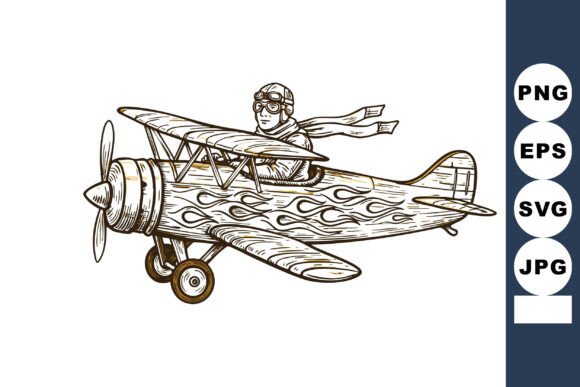
When I am evaluating a new digital asset for my studio, I rarely look at the preview image in isolation. I look at how it translates from a screen to fabric. As a designer who frequently bridges the gap between digital illustration and physical embroidery, I treat every file as a potential client project before I ever thread the needle. Recently, I pulled down the Vintage Biplane with Pilot Flying Retro design to see if it holds up under the scrutiny of real-world application. The product description highlights an illustration of a vintage biplane with a pilot wearing goggles and a scarf, flying a propeller aircraft in a retro style calm mood. It comes as a downloadable ZIP including SVG, EPS, JPG, and PNG files. While these are graphic formats, for us embroiderers, they represent the source vector or high-resolution guide we use to digitize or plan our stitching.
The Mood and Visual Personality
The first thing that strikes me about this design is its atmosphere. It isn’t chaotic or overly busy; it carries a calm mood that is surprisingly effective for merchandise. In a market saturated with loud, neon graphics, there is a quiet appeal to this retro aesthetic. The composition feels balanced, which is crucial when translating a 2D illustration into a stitched piece. The pilot’s goggles and scarf provide distinct focal points—elements that tend to stitch beautifully because they offer clear lines and defined shapes. This isn’t just a generic airplane; it has character. For a craft business owner or an Etsy seller, that character is what drives engagement. Customers don’t just buy a plane; they buy the nostalgia and the story of adventure associated with early aviation.
Real-World Application: From Screen to Stitch
I put this design through a mental stress test by imagining it on various products. Where does Vintage Biplane with Pilot Flying Retro naturally belong? My immediate thought was a custom embroidered tote bag design. A canvas tote provides a flat, stable surface that allows the details of the pilot’s face and the biplane’s struts to shine. If you are creating a handmade product line focused on travel enthusiasts or aviators, this fits perfectly. It works as a sweatshirt embroidery on the chest, offering a subtle nod to classic Americana without overwhelming the garment.
I also envision this as a centerpiece for nursery decor. The retro style is soft enough to work in a gender-neutral baby room. As a baby embroidery project on a receiving blanket or a onesie, the calm mood translates well. However, the scale matters here. On a small item like a cap or a hat, the details might get lost unless the digitizer simplifies the lines significantly. For a custom apparel piece like a denim jacket back panel, the design could serve as a large statement piece, especially if combined with other elements. But for a standalone embroidered patch, the current level of detail needs careful consideration regarding the backing and edge finishing.
Technical Considerations and Stitch Performance
As a professional reviewer, I must address the technical translation. Since the product type is listed as Graphics and Illustrations, you likely have vector or raster files. If you are using these as a reference for manual digitizing or converting them via software, the stitch density will be your primary concern. The biplane’s wings and the pilot’s scarf require smooth transitions. A heavy fill stitch might make the scarf look bulky, whereas a combination of running stitch for outlines and lighter fills could preserve the delicate retro feel. The goggles need crisp edges, likely requiring a precise satin stitch to avoid puckering.
Thread colors are critical here. To maintain the vintage vibe, you should avoid overly bright, synthetic-looking threads. Opt for muted tones—ochres, faded blues, and dusty reds. The contrast between the pilot’s skin tone and the dark goggle lenses will define the expression. If you are testing this on dark fabric, ensure your underlay stitches are sufficient to prevent the base color from showing through the lighter fill areas. Conversely, on light fabrics, the design might lose some punch if the thread colors aren’t saturated enough. Always check the thread color contrast against your chosen fabric swatch before committing to a full run.
Where to Use Carefully
No design is universal, and Vintage Biplane with Pilot Flying Retro has specific constraints. I would advise caution when placing this on curved surfaces like baseball caps. The curvature can distort the straight lines of the biplane’s fuselage, making it look slanted unless the digitization accounts for the curve. Similarly, on stretchy fabric like jersey knits used for t-shirts, the design requires a strong stabilizer and possibly a tear-away backing to prevent distortion during washing. The small details, such as the propeller blades or the pilot’s fingers, may not render clearly on very small hoop sizes. If you are aiming for a tiny lapel pin size, you might need to simplify the design significantly.
Furthermore, consider the end-user experience. If this is a kitchen towel or an apron, frequent washing will be part of the lifecycle. Dense stitch areas can trap lint or detergent residue over time. Ensuring the design isn’t too dense will help maintain the integrity of the embroidery after multiple washes. For a holiday gift or a wedding gift, presentation matters. A clean, well-stitched version of this design conveys professionalism and care, enhancing the perceived value of the finished product.
Practical Designer Notes for Success
If you are planning to use this in your craft business or as a small shop product, follow these steps to ensure quality:
- Test on Scrap Fabric: Never go straight to the final garment. Stitch the design on a scrap piece of the same fabric type to check for tension issues and color accuracy.
- Check Stitch Density: Review the digitized file (if applicable) to ensure the stitch count is reasonable. Too many stitches can lead to long hooping times and increased risk of thread breaks.
- Confirm Hoop Size: Ensure the design fits within your standard hoop sizes. If it is borderline, consider resizing or cropping slightly to avoid edge clipping.
- Inspect Small Details: Zoom in on the pilot’s face and the plane’s mechanics. Are the eyes visible? Can the propeller be distinguished? If details are too fine, they may merge into blobs during stitching.
- Use Proper Stabilizer: Match your stabilizer to the fabric weight. Heavy fabrics need heavy stabilizers; lightweight fabrics need light, cut-away stabilizers to prevent pull.
- Verify Licensing: Before selling any commercial embroidery items, double-check the license terms. Even if the file includes SVG and EPS, commercial rights for the physical product may vary. Ensure you are compliant to protect your Etsy seller account or boutique brand.
Final Verdict
Vintage Biplane with Pilot Flying Retro is a versatile and charming design asset. Its retro calm mood makes it suitable for a wide range of projects, from personalized gifts to apparel decorators looking for unique inventory. It succeeds because it balances detail with readability, offering enough visual interest to hold attention without becoming cluttered. For the right audience—aviation lovers, vintage enthusiasts, and fans of handmade goods—this design offers a strong foundation for a profitable and aesthetically pleasing product line. Just remember to respect the technical limitations of embroidery, test thoroughly, and let the quality of your stitching speak for itself.